
If you’ve shopped for high-quality water treatment systems online, you may have noticed that many top brands — like Pentair, Goulds, and Fleck — list identical prices across different retailers. That’s because of Minimum Advertised Pricing (MAP) policies.
MAP pricing is set by the manufacturer to ensure fairness and consistency among all authorized dealers. It limits the advertised price you’ll see on websites, in ads, or in print.
But here’s the key: MAP policies only apply to advertised prices — not the final sale price. Aqua Science can often offer you a lower price privately, as long as it’s not publicly displayed.
Why Aqua Science Customers Still Get the Best Price
We believe in transparency, service, and value — not just following the crowd. Here’s how we make sure you get the best deal even within MAP guidelines:
What’s the biggest mistake that you think you are making now? To install the pressure switch and not care!
Most homeowners and even some contractors install a pump water pressure switch and never touch the factory presets. But here’s the kicker: factory settings are generic. They’re not tuned for your unique water usage, pump curve, or pressure tank size—leading to poor flow, short cycling, and premature pump wear.
Why Adjust Your Pressure Switch at All?
If your water pressure feels weak—or the pump keeps clicking on and off—your pump water pressure switch is likely out of sync with your real-world usage. Factory defaults (like 30/50 PSI) may not align with household demands, multi-story buildings, or high-efficiency fixtures.
When to adjust:
● Upgrading to a larger pressure tank
● Installing a booster pump or VFD
● Adding multiple bathrooms or irrigation lines
● Experiencing rapid short-cycling or flow drop-offs
Think your water is safe just because it looks clean? If you rely on well or even city water, invisible microbial threats like E. coli, Giardia, and Cryptosporidium might still be flowing through your tap. The truth is—chlorine can’t always neutralize these tough pathogens. But a powerful ultraviolet water purification system can.
Would you like to take a look at it? Well, this post will detail out the same for you -
Why Should You Be Concerned?
Pathogen outbreaks aren’t just rare accidents. They’re real, frequent, and deadly when water disinfection fails.
Pathogen
Infection Caused
Chlorine Resistance
UV Sensitivity
E. coli
Gastrointestinal illness
Moderate
High
Giardia lamblia
Diarrhea, cramps
High
High
Cryptosporidium
Severe diarrhea
Extremely High
High
Ever heard of the Milwaukee 1993 outbreak? Over 400,000 fell ill. The culprit? Cryptosporidium—which chlorine couldn’t kill.
What Is UV Water Treatment?
Let’s clarify: a UV water treatment system is a post-filtration
When your carbon block clogs prematurely or your reverse osmosis system loses efficiency too soon, sediment is usually the hidden culprit. While often overlooked, a whole house sediment water filter is the quiet workhorse that sets the foundation for every high-performing water filtration system. It’s your first line of defense — and often, the most critical.
Let’s break the myths, explore the flow, and show why systems thinking starts with sediment filtration.
Still Think a Sediment Filter is Optional?
It' s time to rethink your choice!
Many homeowners believe that carbon blocks or RO membranes can "handle it all" — including sediment.
Myth #1: “Carbon filters remove everything, including sediment.”
Fact: Carbon filters are for chemicals and organics, not physical particles. Excess sediment chokes them fast.
Myth #2: “RO systems filter everything, so pre-filters are redundant.”
Fact: Without pre-filtration, RO membranes foul quickly, reducing lifespan and spiking maintenance costs.
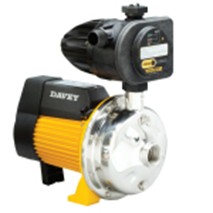
Low water pressure can disrupt everything—from your morning shower to running the dishwasher. If you're tired of inconsistent flow, noisy starts, or pumps that just can’t keep up, you're not alone. The Davey booster pump lineup is engineered specifically to solve these daily pressure headaches with unmatched consistency, efficiency, and quiet operation.
Let’s explore why homeowners and water system professionals trust Davey as their go-to pressure solution.
Feeling the Pressure? Here’s What’s Likely Going Wrong
In most homes, water pressure drops due to one or more of the following:
● Distance from the main supply or well
● Elevated plumbing fixtures
● Multiple fixtures running at once
● A failing or undersized pump system
● Poorly maintained pressure tanks or switches
These issues aren't just annoying—they can shorten the lifespan of your appliances and affect your quality of life.
It is nearly impossible to say that any method of fastening or type of tool is better than another. As with almost anything in the plumbing world, there is a time and a place for everything. PEX pinch clamps and crimp rings are certainly no exception.
Both copper crimp rings and stainless pinch clamps are great for making connections onto ASTM-F1807 PEX fittings. In this blog, we will cover several reasons you may want to consider using stainless steel pinch clamps instead of copper crimp rings when making PEX plumbing connections.
When working with PEX tubing in plumbing applications, there are a number of ways to attach a PEX pipe to a fitting (such as an elbow, a tee, or a valve) in order to branch off or continue the piping.
What is a PEX Crimp Connection?
A crimp ring makes the aforementioned connection by utilizing a metal ring (called a crimp ring) that is an unbroken single piece of metal that slides onto the end of the PEX tubing; only marginally larger than the tube itself. This
Advantages of Buying Water Treatment & Filtration Online
Featured Snippet: Buying water treatment online offers wider selection, transparent specs and certifications, side-by-side comparison tools, expert pre-sales support, verified reviews, subscription filter refills, and quick delivery. You’ll match the right system to your water issues—often at lower total cost—without showroom limits or pressure.
Aqua Science has helped homeowners and professionals solve water challenges since 1984—supplying well pumps, pressure systems, and proven water treatment solutions with real human support. Our Rhode Island retail location serves as a hub for nationwide shipping and customer care.
We’ve grown alongside trusted brands and partners over decades, while
Well Seals 101: How to Choose, Size, and Maintain the Right Well Seal
A step‑by‑step guide to understanding well seals—what they are, how to size one correctly, and when to pick ABS vs. cast iron—plus installation tips and maintenance best practices.
A well seal is a two‑piece plate with a compressible gasket that clamps to the top of the well casing. It creates a sanitary barrier, supports the drop pipe and electrical wiring, and helps block insects, debris, and surface water from entering the well.
Most residential systems use 4 in., 5 in., or 6 in. casing sizes; commercial installs may be larger. Seals are available in multiple drop‑pipe bores and with one or more cord pass‑throughs.
The Guardian CP is a well pump controller designed for modern performance and protection.
It’s a smart upgrade for both submersible and jet pump systems, offering reliable constant pressure and advanced safety
features that help prevent common pump issues.
What Makes Guardian CP Unique
All-in-One Control & Protection
Combines pump control, protection, and digital pressure monitoring in a single unit—replacing a standard pressure switch,
pump protector, and mechanical gauge for faster, more failsafe installation.
Broad Compatibility
Works with 115V and 230V systems and can be installed indoors or outdoors with a weather-sealed NEMA 3R enclosure.
Benefits for Homeowners and Installers
Provides city-like consistent water pressure. Users can customize the “cut-in” and “cut-out” settings from
10 to 80 PSI, with a flexible differential of 10 to 55 PSI.
Validate your login