




What’s the biggest mistake that you think you are making now? To install the pressure switch and not care!
Most homeowners and even some contractors install a pump water pressure switch and never touch the factory presets. But here’s the kicker: factory settings are generic. They’re not tuned for your unique water usage, pump curve, or pressure tank size—leading to poor flow, short cycling, and premature pump wear.
Why Adjust Your Pressure Switch at All?
If your water pressure feels weak—or the pump keeps clicking on and off—your pump water pressure switch is likely out of sync with your real-world usage. Factory defaults (like 30/50 PSI) may not align with household demands, multi-story buildings, or high-efficiency fixtures.
When to adjust:
● Upgrading to a larger pressure tank
● Installing a booster pump or VFD
● Adding multiple bathrooms or irrigation lines
● Experiencing rapid short-cycling or flow drop-offs
Fine-Tuning Cut-In and Cut-Out: A Delicate Balance
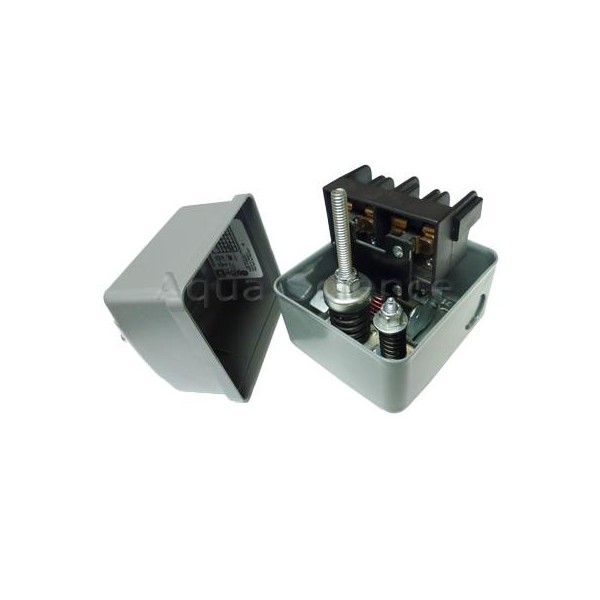
Inside your pressure switch, you'll find two spring-loaded nuts. One controls the cut-in pressure (when the pump starts), and the other sets the differential (gap between cut-in and cut-out).
Here's a quick breakdown:
|
Adjustment Type
|
Purpose | Result |
|
Cut-In Pressure
|
When pump turns ON | Affects low-pressure threshold |
|
Cut-Out Pressure
|
When pump shuts OFF | Impacts high-pressure shutoff |
|
Differential Nut
|
Controls PSI gap (20 PSI std.) | Prevents too-frequent cycling |
Want more water pressure upstairs or at the kitchen sink? Increase your cut-out slightly—but remember, your pressure tank and plumbing must handle it.
Match the Air Pre-Charge – Don’t Skip This!
Your pressure tank must be in sync with your switch settings. Set the air pre-charge to 2 PSI below the cut-in pressure when the system is off and drained.
Example:
If you’re running a 40/60 PSI switch, your tank pre-charge should be 38 PSI.
Skipping this step causes the bladder to over-expand or collapse, reducing tank capacity and cycling efficiency.
Avoid Short-Cycling – Save Your Pump’s Life
Short-cycling isn’t just noisy. It kills pump motors fast. It happens when the pressure tank is undersized or the pump water pressure switch is miscalibrated, causing the pump to turn on/off every minute.
Fix it by:
● Increasing the pressure tank size
● Proper air pre-charge tuning
● Adjusting cut-in/cut-out pressures to widen the cycle time
This is where proper calibration shines—it reduces stress on both the pump and the switch.
Commercial or Multi-Unit Systems? Calibration Is Crucial
For high-demand environments, like apartment complexes or office buildings, the well pressure switch settings can’t be left at default. Flow rate, vertical lift, tank capacity, and simultaneous use must all be factored in.
Custom calibration ensures:
● Stable water flow during peak hours
● Longer pump lifespan
● Efficient tank refills
● Minimal energy loss
This is exactly where Aqua Science steps in—with expert-engineered systems tailored to your setup, using premium components and hands-on calibration support.
How to Set the Pressure Switch on a Water Pump?
Turn off power. Open the switch cover. Use a wrench to adjust the main spring (cut-in) and differential spring (cut-out). Match settings to tank pre-charge and desired PSI range.
What Happens if Water Pressure Is Too High?
Too much pressure stresses pipes, fixtures, and your pump system. It may cause leaks, valve damage, and increased energy use. High pressure must be regulated with proper calibration or a pressure-reducing valve.
How Long Does a Pump Pressure Switch Last?
Typically, a pressure switch lasts 5 to 7 years, depending on usage, system cleanliness, and correct calibration. Premature failure often results from short-cycling or exposure to sediment and moisture.
Final Takeaway: You Can’t Optimize What You Don’t Calibrate
A poorly tuned pressure switch can silently drain your efficiency, damage equipment, and leave you with low or inconsistent pressure. Take the time—or better yet, let an expert—calibrate your pump water pressure switch based on actual household or commercial needs.
Still wondering if your switch is doing its job right?
That’s the question you shouldn’t wait to answer.
If you're ready to stop guessing and start optimizing, Aqua Science is here to provide hands-on water system tuning and customized solutions that actually perform.
Let’s talk pressure—the right kind.


Validate your login