





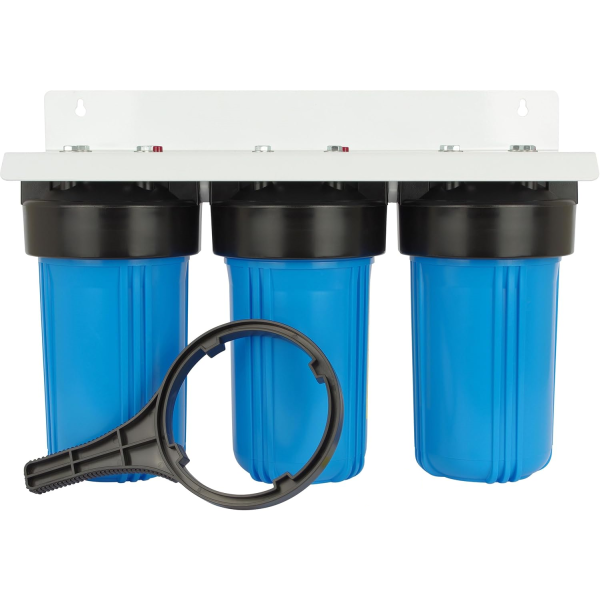
When your carbon block clogs prematurely or your reverse osmosis system loses efficiency too soon, sediment is usually the hidden culprit. While often overlooked, a whole house sediment water filter is the quiet workhorse that sets the foundation for every high-performing water filtration system. It’s your first line of defense — and often, the most critical.
Let’s break the myths, explore the flow, and show why systems thinking starts with sediment filtration.
Still Think a Sediment Filter is Optional?
It' s time to rethink your choice!
Many homeowners believe that carbon blocks or RO membranes can "handle it all" — including sediment.
Myth #1: “Carbon filters remove everything, including sediment.”
Fact: Carbon filters are for chemicals and organics, not physical particles. Excess sediment chokes them fast.
Myth #2: “RO systems filter everything, so pre-filters are redundant.”
Fact: Without pre-filtration, RO membranes foul quickly, reducing lifespan and spiking maintenance costs.
Clogged carbon. Pressurized strain on softeners. Membranes fouled by rust and grit. You don’t notice it until performance drops — or you’re spending more than expected on replacements.
Why Sediment Filtration Comes First: The Systems View
Start thinking of water treatment like a relay race. If the first runner — your whole house sediment water filter — drops the baton, the entire team suffers.
A typical smart-flow configuration looks like this:
➡ 5-Micron Sediment Filter
➡ Carbon Block (VOC/Chlorine Reduction)
➡ Water Softener or UV Treatment
➡ Reverse Osmosis System (TDS Reduction)
Each stage depends on clean input. Sediment — sand, silt, rust, debris — is not just dirt. It’s a system wrecker.
What Happens Without Sediment Pre-Filtration?
● Your carbon filter loads up fast, cutting its lifespan in half
● The softener resin bed clogs with particulate, affecting regeneration
● RO membranes foul, leading to poor TDS rejection and slow recovery
● Flow rates drop, and pressure loss becomes a daily frustration
Ever wondered why your water pressure drops suddenly… even after replacing the RO filters?
Real-World Impact: Less Replacement, More Efficiency
Let’s get practical. Homes and commercial setups using pre-filtration report:
● 50–70% longer carbon filter life
● More stable RO system recovery rates
● Fewer softener malfunctions
● Improved overall system throughput
Multiple brands offer NSF-certified 5-micron sediment filters that are built to handle real-world water challenges — whether from wells or municipal lines.
Using a softener before a sediment filter? That setup might be doing more harm than good.
Choosing the Right Sediment Filter for Whole House Use
This isn't about grabbing the cheapest canister off a shelf. A whole house sediment filter must align with your system design, pressure levels, and water quality profile.
Choose between spin-down filters, for high sediment loads or depth filters for finer capture
Go for at least 5-micron filtration to balance protection and flow
For well water? Consider dual-stage filters or sediment traps
Think all 5-micron filters are the same? Think again — the material and design can make or break your system performance.
Quick Answers to Common Questions
How often do you change a whole house water filter?
Typically every 3 to 6 months, depending on water quality and filter type. High sediment or iron levels may require more frequent changes.
What is a completed whole house water filtration system?
It’s a multi-stage setup — sediment pre-filter → carbon filter → softener → UV or RO — offering broad-spectrum protection across your plumbing system.
Do whole house sediment filters work?
Yes. When matched properly, they significantly reduce sediment load, protect downstream units, and improve system longevity.
How do I choose a whole house water filter?
Assess your water source (well or city), contaminant load, flow rate, and treatment goals. A water test helps select the right micron rating and filter type.
Protect the Heart of Your System by Starting at the Front Line
Whether you're treating municipal chlorine or sediment-heavy well water, your system’s success starts with that first filter. Don't let particulate pollutants sabotage your investment downstream.
At Aqua Science, we engineer every system with this systems-thinking approach — matching sediment filters with the right carbon blocks, softeners, and RO units, backed by expert support and high-grade products.
Need help sizing or selecting your pre-filtration stage? We’re here to cater to all your water solutions related demands — with precision, speed, and smart design.
Make your next system last longer, flow stronger, and cost less. Ask yourself: is your sediment filter doing enough?


Validate your login