


Aqua Science Water Wisdom · Private well checklist
Clear water does not always tell the whole story. A private well can supply water that looks and tastes fine while carrying microorganisms you cannot see. Choosing UV protection starts with your water test—and continues with the way you operate and maintain the system.
Use this checklist to discuss the right equipment, certification and safeguards for your home. UV can be one part of a properly designed treatment system; regular testing and well maintenance remain essential.
First, understand what UV does
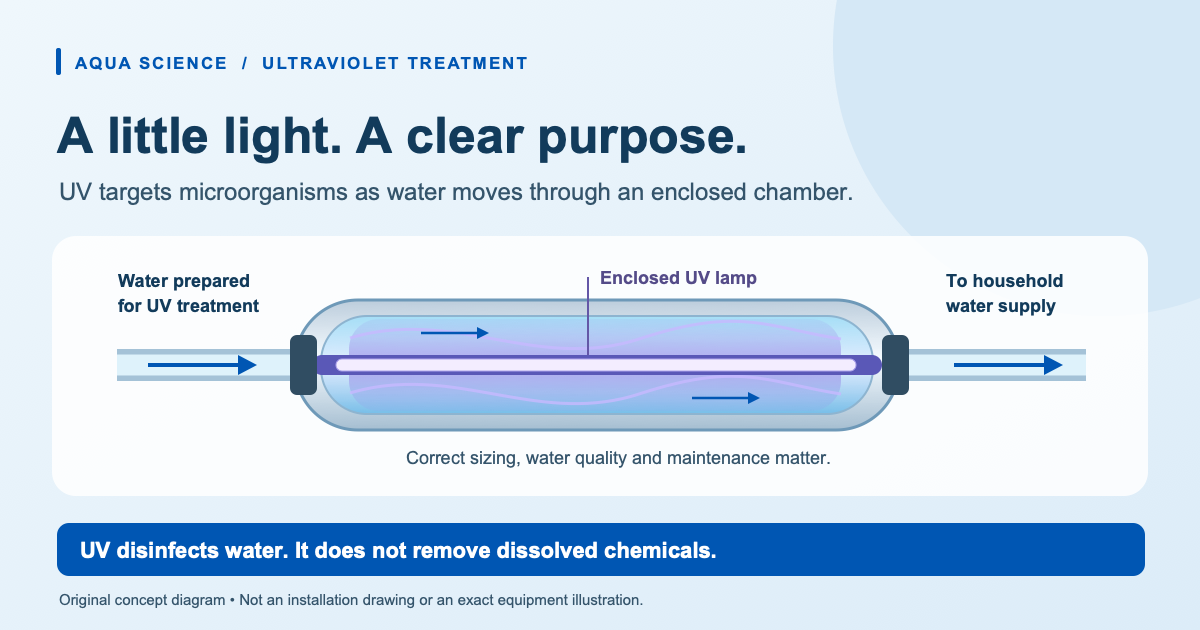
Water flows through an enclosed chamber where germicidal ultraviolet light damages the genetic material of susceptible microorganisms, preventing them from reproducing. Effective treatment requires the right UV dose under the system’s specified operating conditions.
UV adds no disinfecting chemicals and does not add a chlorine taste or odor. Its performance depends on water quality, flow and maintenance. Prefiltration helps keep particles from shielding microorganisms from the light.
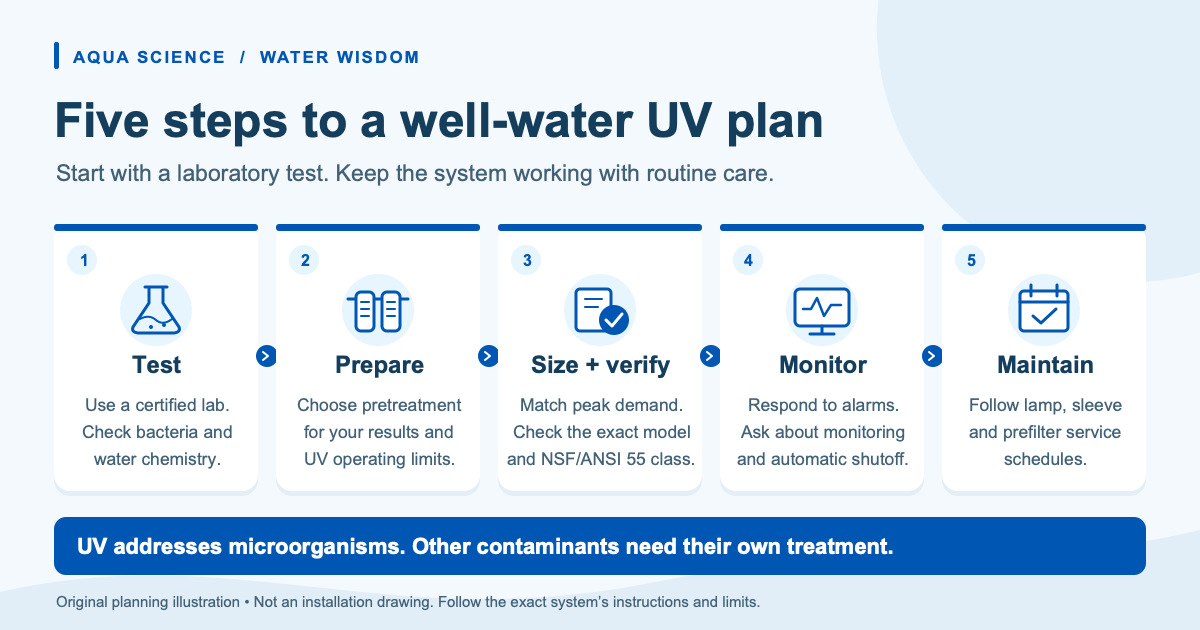
1. Start with the right laboratory tests
Private wells do not receive the routine public-water monitoring provided to municipal supplies. Flooding, damaged well components and other contamination pathways can change water quality. A satisfactory result describes the sample collected that day; it cannot guarantee that conditions will stay the same.
- Use a state-certified drinking-water laboratory. For bacterial concerns, request total coliform and E. coli testing. An iron bacteria screening is not a substitute for these tests.
- Keep an annual testing schedule. EPA recommends total coliform bacteria, nitrates, total dissolved solids and pH. Ask your health department about additional local concerns.
- Retest when conditions change. Flooding, well repairs, nearby contamination or changes in taste, color or odor can call for additional testing.
2. Address a contamination result
Investigate and correct the source of contamination with your health department or a qualified well contractor. Installing a UV unit does not repair a damaged well or automatically disinfect plumbing that is already contaminated.
3. Prepare the water before UV
The light must be able to pass through the water. Sediment, discoloration and deposits on the quartz sleeve can interfere with treatment. Depending on your results, pretreatment may include sediment filtration, iron removal, softening or another process.
Compare the water entering the UV unit with the exact model’s requirements, including clarity and UV transmittance where specified. Have the installer confirm the treatment sequence and service access. Keep the pretreatment equipment maintained along with the UV system.
4. Check the exact certification and its purpose
Ask whether NSF/ANSI 55 Class A certification is appropriate for your well and verify the exact model in the certifier’s listing. A brand name or a general “UV” label does not establish a particular treatment claim.
Class A: disinfection
Intended for microbiologically unsafe water within the model’s operating limits. The water must be visually clear. This class is not designed for gross contamination such as raw sewage, or for converting wastewater into drinking water.
Class B: supplemental treatment
Intended to reduce normally occurring, non-disease-causing microorganisms in drinking water already considered microbiologically safe and of known quality. It is not a substitute for primary disinfection of an unsafe well supply.
Confirm the certified class, applicable microbial claims, permitted flow and required incoming water quality. Certification does not mean a system treats every possible contaminant.
5. Size for peak water use
Showers, faucets and appliances may run together. Select a system that can handle the maximum flow through it at the required UV dose and your actual water quality. Water moving too quickly can receive insufficient exposure.
Ask your installer how the rated flow will be maintained, including whether the model requires a flow restrictor. A flow rating without its treatment conditions is not enough to choose a system.
6. Put maintenance on the calendar
- Replace the lamp on schedule. Many conventional residential UV lamps require annual replacement in continuous use, even if they still glow. Follow your model’s interval; some lamps have a different service life.
- Keep the quartz sleeve clean. Mineral deposits can block UV transmission. Follow the manufacturer’s cleaning and replacement instructions.
- Service prefilters and keep records. Track filter changes, lamp installation dates, cleaning, alarms and water-test results.
7. Know what happens during a failure
UV requires electricity. Before buying, ask what the exact system monitors, how it signals a fault and whether a compatible automatic shutoff valve is included or optional. A lamp-status indicator is different from a sensor that monitors UV performance.
If you rely on UV for disinfection and treatment stops, use a safe alternative water supply while following the manufacturer’s response and restart procedures and any health department advice. Flow at the faucet does not prove the UV is operating. Confirm whether plumbing disinfection or repeat testing is needed before normal use resumes.
Related reading
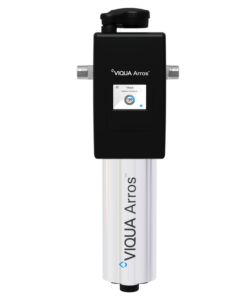
For a separate product overview, read VIQUA Arros UV: features and ordering. Check the exact model’s certification against your needs. Arros orders must be placed by phone at 1-800-767-8731; they cannot be completed through Aqua Science’s website checkout.
Sources and further reading
- EPA: Protect Your Home’s Water — testing frequency and changing well conditions.
- CDC: Testing Well Water and Treating Well Water — laboratory testing and response to contamination.
- CDC: Home Water Treatment Systems — treatment choices and UV limitations.
- NSF: Water Treatment Standards and NSF/ANSI 55 published scope (2019 preview) — the different purposes and limits of Class A and Class B.
- VIQUA: UV System FAQs and UV System Maintenance — water preparation, flow, monitoring and routine care.
- Minnesota Department of Health: Iron Bacteria in Well Water — why other water-quality testing is still needed.
Choose UV around your water and your home
With 42 years of water treatment experience since 1984, Aqua Science helps homeowners review water-test results, household demand and existing equipment. You should not have to guess about bacteria in your drinking water or which questions to ask before choosing treatment.