



Aqua Science • Well Water Help
By Michael Izzo
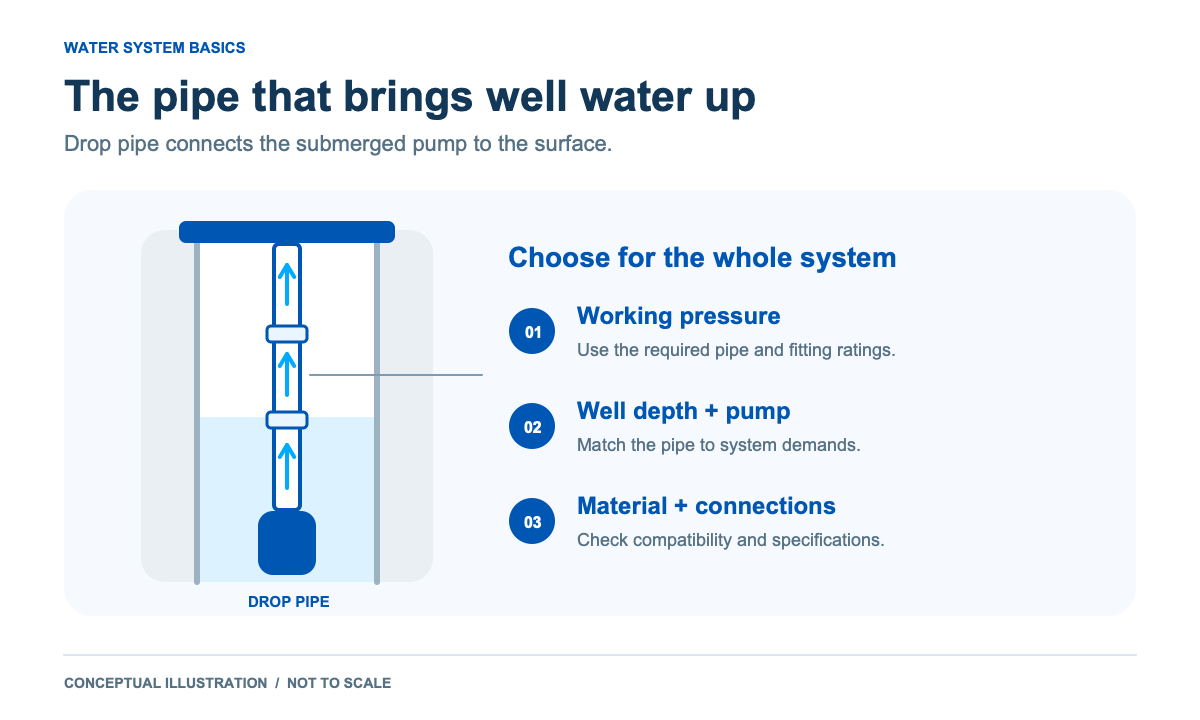
The pipe supporting your submersible pump must carry water and withstand the demands of the installation. Choosing it by diameter or a single pressure number can overlook important limits.
Aqua Science can help you gather the information needed for pipe selection. The final choice should follow the pump and pipe manufacturers’ instructions and the requirements of your well installation.
Understand what the pressure calculation means
A column of water contributes approximately 0.433 psi per vertical foot. For illustration, 330 feet of water head is about 143 psi; adding 50 psi at the surface gives roughly 193 psi before accounting for other conditions.
That example does not establish that 200-psi pipe is suitable. Pumping water level, pump setting depth, pressure inside the pipe, pressure outside the submerged pipe, friction, and pump shutoff head are different parts of the design. An installer must evaluate the pressure the pipe and fittings can actually experience.
Treat a simple depth-plus-pressure formula as an illustration of water head, not a complete pipe-sizing rule or a minimum rating recommendation.
Check more than normal operating pressure
- Maximum pressure: include the pump’s capabilities, pressure controls, and possible transient conditions, not only the gauge reading during normal use.
- Temperature and material: use the pipe manufacturer’s pressure rating and any temperature derating.
- Suspended load: the assembly must support the pump, pipe, water, and installation loads within its approved limits.
- Connections: couplings, adapters, valves, and fittings must be compatible and suitably rated. A stronger pipe does not fix a weak connection.
- Flow and friction: pipe diameter affects pressure loss and the pump’s operating point.
Changing water levels affect system selection
A lower pumping water level increases the lift the pump must provide to deliver water at the desired surface pressure. It can change the flow the pump delivers. It does not justify assuming that pipe pressure rises by the same simple amount in every situation; evaluate the complete system and pump curve.
What to gather before buying pipe
Provide the pump model, setting depth, static and pumping water levels, required flow, pressure-switch settings, pipe material and diameter, and the planned fittings. If any of that information is missing, your well report or installer may help.
Well-pump installation involves electrical hazards, suspended equipment, and pressurized water. Use a qualified well professional for selection and installation rather than relying on this overview as a construction specification.
Need help with your well system?
Contact Aqua Science with your system details so we can help you compare suitable equipment.
Visit Aqua Science