The store will not work correctly when cookies are disabled.
Join the Aqua Science Insiders Club
42 years of Expertise in Engineered Water Treatment and Well SystemsPrice Match GuaranteeLifetime WarrantyThe Largest Selection of Residential Filtration SystemsWell Water Components and SuppliesReplaceable FiltersComplete Water TestingIndustry’s Best BrandsExcellent Tech SupportWater Treatment ChemicalsCustom solutions designed to address your specific needsMost products ship the same day
Metal Oxide Varistor (MOV) components are designed in series to act as an
insulator under normal conditions, then begin conduction in the proper
form as voltage rises for positive discharge of high voltage surges
120 / 240 Volt installations for single phase applications; this type is
available for phase configurations below 600V
For surges of 500+ volts, this arrester is built to
bypassing high voltage to ground rather than absorb it, with surge current ratings
matched
to the application to withstand transient events and deliver the protection
results expected
Heavy-duty models have threads and nut to attach to the electrical panel, installed and
connected by conductor to the panel grounding path; proper
use at the correct protection level matters, especially where surges may enter
from power distribution or transmission lines; UL information should be verified
for the specific installation
Application: lightning arrestor can be used with a variety of enclosed motor controls,
transformers, and similar components or equipment where
protection from damaging effects is needed
Surge arrester ratings are defined under IEEE standard C62.11 section;
standards and code changes may affect application review, and these devices are also
called surge protection devices in related electrical documentation
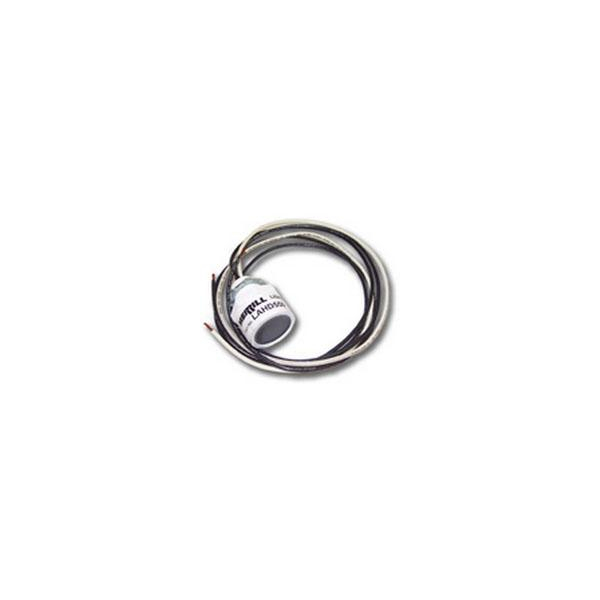
Merrill Lightning Arrestors are surge protection devices installed on 120 volt or 240 volt power systems, designed to help
protect motors and controls from a voltage surge caused by lightning strike events, switching loads, and other sources.
Heavy-duty models include threads and a nut for attachment to an electrical panel or enclosed motor controls,
including well pump controls, and can be applied as main protection for water well equipment and similar electrical system equipment to provide protection for both residential and agricultural electrical systems. Surges of 500 volts or more are directed to ground; a surge arrester does not absorb lightning, but diverts transient energy and surge current so electricity moves through the air-gap protection path to earth rather than into connected equipment to limit damage to protected equipment. Lightning strikes occur about 100 times per second worldwide and can reach up to 300,000 amps of current. In most cases, preventing repeated surge damage helps reduce maintenance costs and equipment failures.
If you are a homeowner, agricultural property owner, contractor, or commercial property manager using a well pump system or other
motor controls, this page explains which Merrill lightning arresters fit 120/240 volt applications, how the devices are
connected and installed for effective protection, how to test them with an ohmmeter, and where they are used to safeguard
panels, controls, and water system equipment.
Product Specification for Surge Arresters
SKU# LAHD550
Manufacturer: Merrill
Model #: LAHD550
Shipping Weight: 1 lbs
Checking Your Lightning Arrestor
Check a Lightning Arrestor with an ohmmeter
Lightning arrestors have a unique feature unlike other secondary lightning arrestors in that they can be checked with a
conventional ohmmeter. This helps confirm whether the arrester can still protect equipment after surge events of
short duration.
With arrestor removed from circuit:
Set selector knob on ohmmeter to RX100K.
Connect both black "lightning arrestor" leads to one ohmmeter lead.
Connect white "lightning arrestor" lead to the other ohmmeter lead.
Resistance should read infinity (00). If a resistance reading other than infinity (00) is attained, the "lightning arrestor" should be replaced.
In some cases, readings outside the expected value can also point to broader power-quality issues such as harmonics, though
replacement guidance remains the same.











Validate your login